Neighborhoods


Strategic Neighborhood Transformation

Sidebar images:
Body:

Mahoning Valley leaders welcomed an announcement late Friday afternoon that Youngstown and Warren were awarded more than $3.3 million in state funds to support the development of workforce housing in the two cities.

Youngstown will receive $2.5 million and Warren will get $851,000 from the Residential Economic Development District program, Gov. Mike DeWine and the Ohio Department of Development announced Friday. The state awarded more than $9 million in grants to support the creation of workforce housing in five communities.  

“As our economy grows and more opportunities are created across the state, investing in workforce housing ensures that the people powering Ohio’s success can live and thrive in the communities they serve,” DeWine said in a news release announcing the grants. “The investments Ohio is making through the REDD program will help more hard-working families put down roots and build brighter futures.”

The REDD program was introduced by state Sen. Michele Reynolds in the state’s biennial budget bill, House Bill 96. The bill was signed into law last year.  

“Ohio’s economic momentum is creating opportunities in communities all across our state. That growth brings the need for more housing to ensure people have a place to call home,” Lt. Gov. Jim Tressel said. “Programs like this help ensure our communities are prepared to meet the moment and create the housing needed to support this incredible growth.”

The REDD program provided up to $10 million in grants this fiscal year, followed by roughly $15 million in fiscal year 2027, to help communities expand housing opportunities close to major economic development projects. Both projects will support housing demand created by investments from Ultium Cells and other regional economic development projects, according to the state news release.

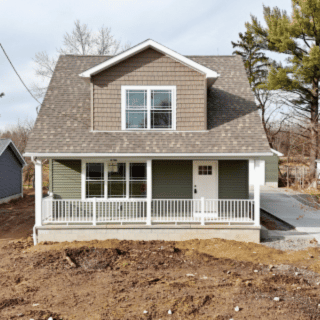
The grant to Youngstown will support the development of up to 220 workforce housing units through an infill housing initiative, collaboration between Youngstown, the Youngstown Neighborhood Development Corp., Mercy Health Youngstown and other community partners, according to the release. 

To read the full story from The Business Journal, click here

Sidebar images:
Body:

Ohio Governor Mike DeWine announced Friday that more than $9 million in grants would go toward the creation of workforce housing in five counties.

"It's really a big deal and you know, it just underscores the momentum that we're seeing in the mahoning valley," Nico Morgione, Director of Government Affairs with the Youngstown Warren Regional Chamber, said. "We're continuing to see economic development wins with the likes of Ultium Cells, Kimberly Clark, a Vallourec expansion, the Youngstown Innovation Hub for Aerospace and Defense," he said.

Among those awarded, Youngstown received $2.5 million and Warren, $850,000.

Youngstown City Spokesman Andy Resnick said in a statement, "This is another example of community partners coming together to continue to grow our city. This specific grant leverages the investment being made in the development with funds that can be utilized for beautification efforts and infrastructure improvements that makes the project more affordable and attractive."

"Youngstown's going to be able to build about 220 homes with these funds with a whole slew of other things. Youngstown is looking more at the infill housing aspect of it and the city of Warren is really focused on their Peninsula Project," Morgione said.

A press release from Governor DeWine and the Ohio Department of Development reads in part:

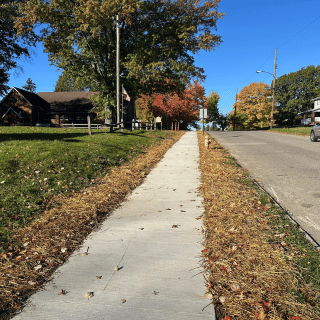
"The City of Youngstown (Mahoning County) will receive a $2.5 million grant to support the development of up to 220 workforce housing units through an infill housing initiative. Funding will be used to improve roads, sidewalks, lighting, and other public infrastructure, while also connecting new homes to existing water and sewer systems. Many of the homes will be built on vacant lots owned by the city and the Mahoning County Land Bank, helping transform underutilized properties into new residential opportunities. Homebuyers will receive a 100 percent, 15-year property tax abatement and be eligible for down-payment assistance through the city's At Home program. The project is a collaboration between Youngstown, the Youngstown Neighborhood Development Corporation, Mercy Health Youngstown, and other community partners. 

To read the full story from WFMJ, click here.

Sidebar images:
Body:

Youngstown is receiving a $2.5 million state grant to help support plans to develop up to 220 workforce housing units while Warren is getting $851,000 to support its Peninsula project to create 306 new housing units.

The $2.5 million for Youngstown will be used to improve roads, sidewalks, lighting and other public infrastructure as well as connect the new homes to existing water and sewer systems.

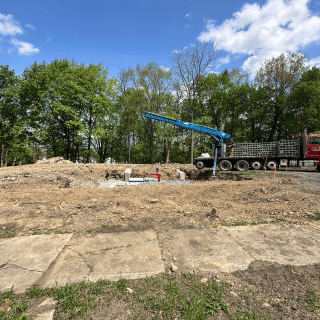
Many of the structures will be built on vacant lots owned by the city and the Mahoning County Land Bank.

The funding is part of the $5 million At Home in Youngstown program created in 2024 using American Rescue Plan dollars given to the city.

Permitted expenses under the program include a maximum of $10,000 for down payments and closing costs, and an additional $15,000 limit for energy-efficient upgrades to windows, furnaces and hot water tanks after a house is purchased.

Those who qualify for funding under the At Home program have to live in the house for at least five years or the funds will be returned. There is no limit on the total household income.

Also, those who purchase new homes in the city can receive a 100% property tax abatement for 15 years.

The program is a collaboration between the city, the Youngstown Neighborhood Development Corp., Mercy Health Youngstown and other community partners.

To read the full story from Tribune Chronicle, click here.

Sidebar images:
Body:

Ohio Governor Mike DeWine and the Ohio Department of Development today announced more than $9 million in grants to support the creation of workforce housing in five counties.  

The funding comes from the Residential Economic Development District (REDD) program, which provided up to $10 million in grants this fiscal year, followed by roughly $15 million in fiscal year 2027, to help communities expand housing opportunities close to major economic development projects.

“As our economy grows and more opportunities are created across the state, investing in workforce housing ensures that the people powering Ohio’s success can live and thrive in the communities they serve,” said Governor Mike DeWine. “The investments Ohio is making through the REDD program will help more hard-working families put down roots and build brighter futures.”

"Ohio's economic momentum is creating opportunities in communities all across our state. That growth brings the need for more housing to ensure people have a place to call home," said Lt. Governor Jim Tressel. "Programs like this help ensure our communities are prepared to meet the moment and create the housing needed to support this incredible growth."

Image of Ohio with counties receiving awards highlighted

A total of $9,198,019 is being awarded to the following communities:

The City of Hamilton (Butler County) will receive a $2.5 million grant to support the development of 100 new workforce housing units through the city’s “Build Back the Block” initiative. Funding will be used to connect new homes on 100 infill lots to existing water and sanitary sewer infrastructure, helping bring long-vacant residential parcels back into productive use. The City of Hamilton currently owns more than 250 residential parcels ready for redevelopment, and this investment will allow construction to begin quickly, with the first 10 homes expected in 2026. Once completed, the homes will be sold below construction cost to low- to moderate-income families, helping strengthen existing neighborhoods while expanding homeownership opportunities. This project supports housing demand created by investments from the Amazon.com facility in Monroe and other regional economic development projects.

The City of Lancaster (Fairfield County) will receive a $1 million grant to support the development of 361 workforce housing units through key public infrastructure improvements. Funding will be used for sanitary and water main extensions, new public road construction, sidewalks, and related infrastructure needed to support a large mixed housing development that includes single-family homes, townhomes, and apartments. The City of Lancaster has modernized its zoning code and reduced development fees to support housing growth, and the project builds on an estimated $70 million private development investment already underway. The improvements will help accelerate housing construction while supporting the city’s long-term growth goals. This project supports housing demand created by investments from Anduril and other regional economic development projects.

The City of Youngstown (Mahoning County) will receive a $2.5 million grant to support the development of up to 220 workforce housing units through an infill housing initiative. Funding will be used to improve roads, sidewalks, lighting, and other public infrastructure, while also connecting new homes to existing water and sewer systems. Many of the homes will be built on vacant lots owned by the city and the Mahoning County Land Bank, helping transform underutilized properties into new residential opportunities. Homebuyers will receive a 100 percent, 15-year property tax abatement and be eligible for down-payment assistance through the city’s At Home program. The project is a collaboration between Youngstown, the Youngstown Neighborhood Development Corporation, Mercy Health Youngstown, and other community partners. 

To read the full release from Governor of Ohio, click here.

Sidebar images:
Body:

The state has awarded funding to the cities of Youngstown and Warren to support new home building in the areas.

The grants were among those awarded in five Ohio counties, funded by the Residential Economic Development District (REDD) program. The program provided up to $10 million in grants this fiscal year and will provide roughly $15 million in fiscal year 2027.

The projects aim to meet the housing demands brought by recent business investments in the area.

The City of Youngstown is receiving a $2.5 million grant to support the development of 220 “workforce housing units.”

The properties will be constructed through an infill housing initiative, building on vacant lots owned by the city and Mahoning County Land Bank, according to a news release from Ohio Gov. Mike DeWine’s office.

As part of the project, funding will be used to connect the new homes to existing water and sewer systems.

Those who purchase the homes will receive a 100 percent, 15-year property tax abatement and be eligible for down-payment assistance through the city’s At Home program.

The project is a collaboration between the city, the Youngstown Neighborhood Development Corporation (YNDC), Mercy Health Youngstown and other community partners.

To read the full story from WKBN, click here.

Sidebar images:
, , , , , ,
Body:

Monday, March 9, 2026

The City of Youngstown will receive a $2.5 million grant to support the development of up to 220 workforce housing units through an infill housing initiative. Funding will improve roads, sidewalks, lighting, and other public infrastructure, while also connecting new homes to existing water and sewer systems. Many homes will be built on vacant lots owned by the city and the Mahoning County Land Bank, transforming underutilized properties into new residential opportunities. Homebuyers will receive a 100 percent, 15-year property tax abatement and be eligible for down-payment assistance through the city’s At Home program. The project is a collaboration between the City of Youngstown, Mahoning County Land Bank, Youngstown Neighborhood Development Corporation, and other community partners. This project supports housing demand created by investments from significant regional economic development projects. More information about the Residential Economic Development District program can be found here

Sidebar images:
Body:

YNDC is seeking candidates for Property Survey Intern.

Property Survey Interns will conduct a citywide housing quality and property conditions survey of the neighborhoods in Youngstown. The majority of work will take place in the field rather than an office setting. This will include traveling every street and conducting a parcel-by-parcel survey documenting the occupancy status and condition of every residential and commercial property in the city of Youngstown.  Conditions to be identified include vacant structures, vacant structures that are clearly abandoned, and occupied structures with major exterior deficiencies. Interns will document property conditions using a mobile mapping software called Regrid. 

TO APPLY, please send cover letter and resume to jdaugherty@yndc.org – Attention: Jack Daugherty 

YNDC IS AN EQUAL OPPORTUNITY EMPLOYER COMMITTED TO DIVERSITY AND INCLUSION.

Sidebar images:
Body:

Monday, March 16, 2026

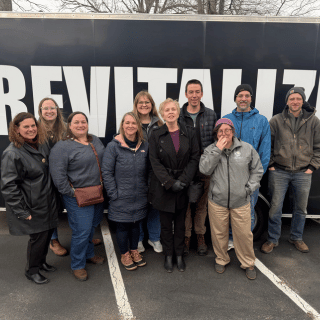
On Friday, March 13, YNDC hosted a delegation from Jamestown, New York, for a brief learning exchange. The delegation included representatives from the City of Jamestown, Chautauqua County, the Jamestown Board of Public Utilities, the Chautauqua County Land Bank Corporation, and community representatives. Participants discussed common challenges and learned about YNDC's history, strategy, and current operations. 

Sidebar images:
, ,
Body:

Monday, March 16, 2026

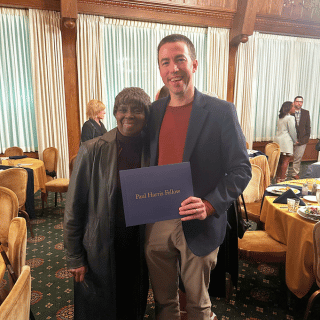
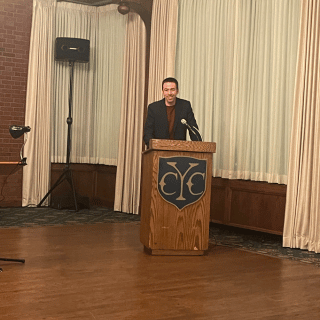
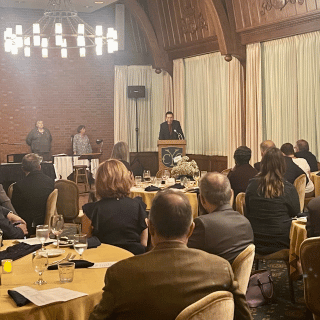
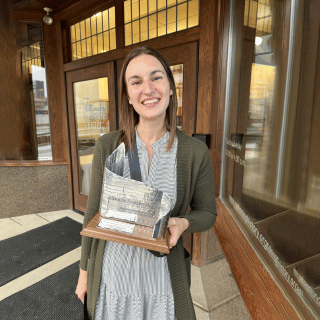
YNDC Executive Director, Ian Beniston, was awarded a Paul Harris Fellowship by the Youngstown Rotary on March 5 at the 111th anniversary dinner for the Youngstown Rotary. Paul Harris Fellowships are presented to community members who exemplify exceptional service, community support, and alignment with Rotary’s mission.

Sidebar images:
Body:

It’s been over a month now since new work requirements for the Supplemental Nutrition Assistance Program (SNAP) have gone into effect — and they impact thousands in the Valley.

Local leaders say most people aren’t having trouble meeting the requirements, but the rising price of food has many seeking help.

Who is affected?

As of Feb. 1, under President Donald Trump’s “One Big Beautiful Bill,” some groups previously exempt from work requirements must now work 80 hours a month or pursue educational or training opportunities, or they’re subject to losing benefits.

Audrey Morales, director of Mahoning County Job and Family Services, says those groups include veterans, adults ages 55 to 64, parents with children ages 14 to 18, people experiencing homelessness and young adults aging out of the foster care system.

Humane agent: 30 dead dogs pulled from house fire

“It’s going to affect at least 38,311 recipients in the Mahoning Valley, under the new requirements,” Morales said.

According to the Ohio Department of Jobs and Family Services, work means paid employment or unpaid work, such as working for goods and services or as a volunteer.

Each month a recipient fails to work is called a “countable month.” After three countable months in a 36-month period, a recipient will lose SNAP benefits and must wait 36 months to apply again.

Laura McCulty Stepp, operating and programs director for the St. Vincent de Paul Northeast Ohio District Council, says she’s concerned about people losing benefits.

“I’m very worried about what’s going to happen when they’re losing those benefits for three years, because your life is going to change dramatically in two years, and to say that ‘I’ve been cut off for the three years,’ and maybe you are in dire circumstances a year from now. So, I worry about that in saying you can’t even come back and apply for it,” Stepp said.

Stepp says for those living in generational poverty, there are many barriers to not only getting jobs but getting to them — especially for those who have never had one.

“So many of the job searches you have to apply online, and not everybody has access to a computer, has access to the internet,” Stepp said. “If they are able to get a job, how are they going to get transportation to get to the job? And childcare is a barrier. Goodwill has done a lot of research on what the largest barriers to care are in the Mahoning Valley, and they identified childcare and transportation as those issues.”

Jobs and Family Services have been notifying clients about the changes since Trump’s Big Beautiful Bill passed in the summer. Morales says most people affected were already working, and those who weren’t seem to be finding work okay.

“Most of the people are working; they just have to meet that minimum. The ones that are not — I haven’t heard a lot. Our employees have to explain the situation to them, and most people are on board with what they have to do,” Morales said.

Morales says of the groups no longer exempt, senior citizens and parents seem to be the most affected.

“Some of the groups that would be affected are the elderly that did not have to meet those requirements with the age change, and then parents with children,” Morales said. “That makes a difference.”

Morales says for anyone struggling with employment, Jobs and Family Services can point them in the right direction.

“We have a department, a unit, called our work group, and they refer them to different work sites, and by all means, we’re looking for work sites,” Morales said. “We will refer to different agencies. OhioMeansJobs helps us with training to make sure the people have the training they need to be work-ready.”

Rising need for food assistance
Even as SNAP recipients meet work requirements, many people in the Valley continue to struggle to make ends meet.

“The amount of money people get in food stamps is not very much to begin with, and with the cost of groceries going up, it doesn’t go as far as it used to,” Stepp said. “We have people that come in that are working a couple jobs, and they’re still at poverty level.”

At St. Vincent de Paul in Warren, Stepp says more people have been reaching out for help.

“We recently started a food box distribution program, too. In February, we gave boxes to 126 families — enough to make more than 3,000 meals, and of those families, about 50 of those were new families, new to us, and I think about 20 of them, according to Second Harvest data, were new to Second Harvest,” Stepp said.

Second Harvest Foodbank of the Mahoning Valley provides food to pantries and agencies in Mahoning, Columbiana and Trumbull counties. Last year, it distributed over 9.7 million pounds of food.

Renee Fuller, associate director at Second Harvest, says she’s also seen the growing demand.

“Our numbers are still staying steady. Normally, after the holidays, the numbers start to drop. Ours have not in our area, which is scary,” Fuller said. “Now, when you think of not just the work requirements and other things they may go through, what’s going up right now? Gas. Transportation is a problem a lot of times as it is — add that extra cost of gas in, and there’s only so much in your budget to work with.”

Fuller says while Second Harvest doesn’t deal with SNAP directly, she’s noticed more uncertainty surrounding SNAP since the government shutdown in the fall. She says any change can be scary.

“People were calling because they were trying to be proactive, and they were all so very scared and nervous, ‘What do we do if we don’t have our benefits?’ I think that’s carrying over even now today as we speak,” Fuller said. “It’s a concern for someone who is trying to figure out, ‘How do I do this on my income, and what else can I do so that I can still have food for my family?'”

What resources are available?

Mahoning and Trumbull counties are home to dozens of pantries and organizations helping food-insecure people.

St. Vincent de Paul Society

St. Vincent de Paul Society has locations in Youngstown and Warren. They not only provide food through their dining halls but can help with transportation, rental assistance, clothing and more. Plus, Stepp says they’re in the process of developing programs to help people with employment.

“We’re hopeful that we’ll be able to help more people in the community, so they won’t actually need to have help for the food program. We just requested money from the state to expand our workforce readiness program so we can help more people in the community,” Stepp said.

St. Vincent de Paul in Warren is located at 540 Main Ave. SW. In Youngstown, it’s located at 430 Williamson Ave. More information on services and hours can be found online.

ACTION

For those without access to transportation, the Alliance for Congregational Transformation Influencing Our Neighborhoods (ACTION) in Youngstown brings food to the community. It has two mobile markets in the Valley — one in Mahoning County and one in Trumbull County.

ACTION’s executive assistant, Samantha Fox, says through a partnership with Flying High, the markets travel to areas lacking grocery stores and provide affordable, fresh food to anyone interested. Plus, discounts are available.

“You spend $25, they take $10. You spend $10, they take $5 off. So, you really are getting more value for your money,” Fox said. “A lot of the produce that’s on the trucks is locally grown. Flying High does have a farm within the city where they grow a lot of their vegetables, and then there’s a farmer they get a lot of their meats from.”

The markets take cash, Apply Pay, debit and credit, as well as SNAP/EBT cards.

Fox says they’ve recently seen a slight increase in people shopping at the mobile markets, which she attributes to their lower prices.

“Now seeing that the community is seeing that the prices on the truck are a lot cheaper than they are in the store, the numbers have gone up just a little bit, but they have gone up,” Fox said.

To see the mobile markets’ schedules, call ACTION at 330-409-1799 or head to its website.

Glenwood Fresh Market

On the South Side, the Youngstown Neighborhood Development Corporation operates the Glenwood Fresh Market.

To read the full article from WKBN, click here.