Neighborhoods


Strategic Neighborhood Transformation

Sidebar images:
Body:

Voters in the sprawling 6th Congressional District of Ohio are fortunate this fall to have two credible candidates seeking to represent its 785,000 residents in the U.S. House of Representatives.

The two candidates also will be familiar names to district voters as this race rises as a rematch of the special election in June in which Republican Michael Rulli defeated Democrat Michael L. Kripchak. The results of that special election — Rulli, 55 percent of the vote; Kripchak 45 percent of the vote – were much closer than most analysts had predicted and the closest in years for that traditionally Republican-dominant 11-county district that winds southward from Youngstown to Marietta.

Clearly, both candidates have appealing qualities to the electorate. After reviewing their backgrounds and conducting interviews with each of them, members of this newspaper’s Editorial Board conclude that either Kripchak or Rulli would serve competently the interests of the 6th District in general and of the Mahoning Valley in particular.

Both Rulli and Kripchak have respectable backgrounds in leadership and public service and neither has made politics a lifelong career.  Rulli has served as director of operations for Rulli Brothers Markets in Boardman and Austintown for three decades and therefore has acquired strong business and customer relation skills.  Kripchak has distinguished himself as an honors graduate of the U.S. Air Force Academy and has worked in myriad fields as an acquisitions officer, research scientist, production manager and as chief of strategy and partnerships for NEGEMS Inc. of New York. Clearly, neither candidate is a slouch.

Both Rulli and Kripchak share similar goals of more sustained job growth and economic development in the district. Kripchak, for example, has developed plans for a Mahoning to Marietta Manufacturing Corridor with the Youngstown area designated as the home base for advanced manufacturing.  Rulli, for his part, vows to prioritize initiatives that stimulate entrepreneurship and investment in job growth. He also plans to work with groups such as the Youngstown Neighborhood Corridor to fortify the housing supply in the region to help attract new businesses and new residents.

To read the full story from the Tribune Chronicle, click here.


Sidebar images:
Body:

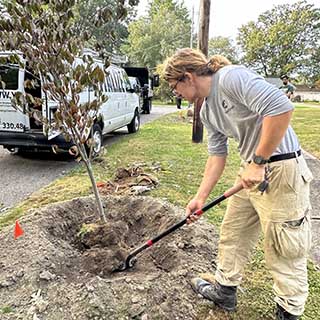
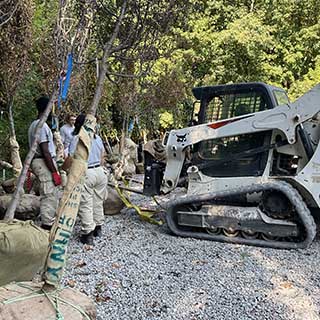
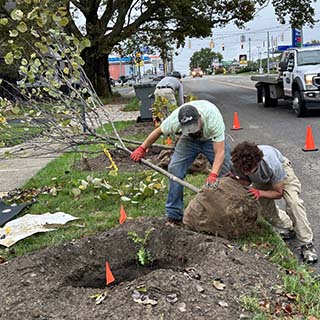
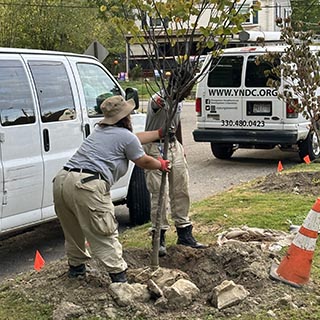
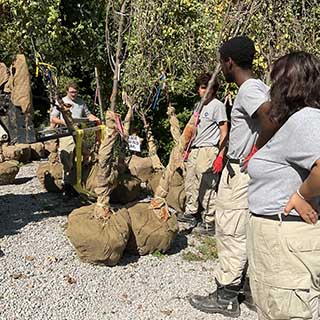
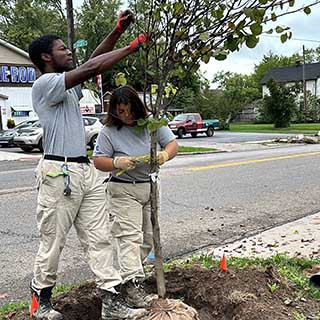
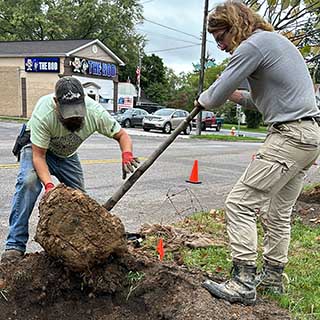
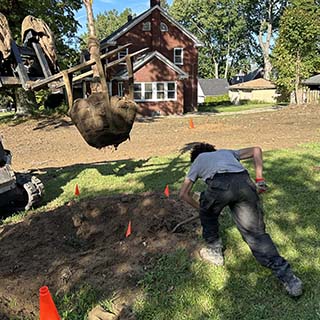
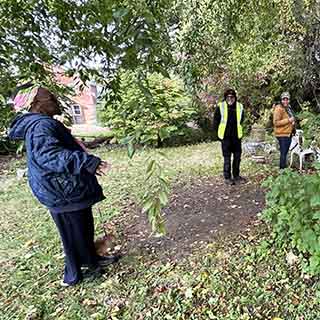
Shovels hit the ground as volunteers began planting new greenery across Warren — part of an initiative to revitalize the city’s urban canopy.  Led by Lydia Lynch, health and wellness coordinator for Trumbull Neighborhood Partnership and the Mahoning Valley Tree Corps, the goal is to plant 5,500 trees across Warren and Youngstown over the next five years, with Warren set to receive 1,215 of those noninvasive, native species trees.

To read the full story from The Tribune Chronicle, click here.

Sidebar images:
Body:

Looking for that perfect book to snuggle up with as the weather cools?  Look no further than the Westminster Presbyterian Church’s 68th annual used book sale that begins Wednesday at the church, 119 Stadium Drive, Boardman. The book sale has been an important fundraiser for the many missions the church helps throughout the year. It began as a simple idea, according to book sale co-chair Andrea Armbrecht.  “It started in 1956 when my father, Rev. Sam Warr, was pastor of the church,” Armbrecht said. “The church was located in downtown Youngstown.”  She said the church used to be at the end of the Market Street bridge in downtown Youngstown on the site where the Thomas D. Lambros Federal Building is located today.

The first book sale was credited to the idea posed by church member Hazel Thorne. She had been to another church that hosted such a used book sale and thought the idea was a good fit for Westminster.  The first book sale was in 1956 with the Westminster Church’s Women’s Association taking on the project. The first year brought in close to $300.  Every year except for the COVID-19 years has seen the sale continue and grow. Following the pandemic, it did drop a bit, but is returning to the pre-COVID-19 sales that saw more than 50,000 used books offered.  The books offered for this year’s big sale have been collected since Nov. 1 of last year. A volunteer staff, including church members and non-members who love books, gather on two Mondays each month to sort the book donations. Co-chair Jan Machel said the program is part of the county’s recycling program.  “We are an official dropoff center for used books,” she said. “We work with the Mahoning County Green Team to recycle.”   She said when a donation of books is dropped off at the church, the volunteers will go through the donations and check them for things like letters, bookmarks, or even money stuck between the pages. The books are then separated into categories and are priced.  “We usually price them at 10% of the value,” Macher said. “And that is for the first day of the sale.”  She said on Thursday, all the paperback books will be sold at 25 cents each. On Friday, all books will be half price until 4 p.m. The sale runs 9 a.m. to 7 p.m. all three days.  After 4 p.m. on Friday, it’s time to move some books and Macher and her staff have just the way to do that.  “We’ve had a donation of paper bags from Rulli’s,” she said.  “On Friday, shoppers can buy the bag for $1 and fill it with as many books as they can fit.”  At the end of the three-day sale, the remaining books are then sent to the recycling center. Volunteer Tom Davis said it is an important service. “I have been doing this since the church was downtown,” he said. “This is a community service for people who can’t afford new books. This is a win-win for everyone.”

Last year’s event, according to Machel, brought in $17,000. That amount, she said, was down from the pre-pandemic years. She said a small amount of those proceeds goes to the church for use of the room, but the majority goes to international, national and local charities.  Among the local charities to benefit from the used book sale are the Rescue Mission of the Mahoning Valley, Protestant Family Services, Needles Eye, Youngstown Neighborhood Development Corp, Habitat for Humanity, Pregnancy Help Center, Hope for Renewal, Sleep in Heavenly Peace and Purple Cat. Machel added the Hope Lodge in Cleveland for cancer patients is also supported.  

To read the full article from The Vindicator, click here.

Sidebar images:
Body:

Tuesday, October 8, 2024. 

YNDC is proud to announce the publishing of its performance report from the 3rd Quarter of 2024!

The performance report highlights the work of YNDC from July to September 2024.

An electronic copy can be downloaded below. 

Sidebar images:
Body:

The Youngstown Restoration & Opportunity Center, being created with a $400,000 American Rescue Plan appropriation from Councilman Julius Oliver will seek to help city residents who are unemployed or underemployed with focuses on health care and the culinary arts.

“It’s a city transforming program,” said Oliver, D-1st Ward. “I’ve been working on this for five years. It exposes youth and adults to opportunities and careers. You get put into a program at no cost to you to go beyond livable jobs and be trained for family-sustaining jobs.”

A $30,000 allocation from Oliver’s $2 million ARP ward fund provided money for a study done by the Manchester Bidwell Corp., with the Youngstown Area Jewish Federation serving as fiscal agent. The study was done by Joanna Papada, Manchester Bidwell’s vice president of external affairs. Manchester Bidwell has worked with more than 20 communities in the United States as well as one each in Israel and Puerto Rico. When Oliver was in Israel, he visited the facility in Akko. Papada said while Youngstown’s unemployment rate is 6.3%, its “functional unemployment,” meaning those who are also underemployed, is 27% and is about 40% for black residents.

“It’s time for us to look at what can be done to reverse that trend,” she said.

The study of the proposed center, called YoROC, states it “aims to prepare adult learners to enter and excel in health care and the culinary arts. This center will be a non-profit organization.”  The initiative will work with Choffin Career & Technical Center and Bon Secours Mercy Health and will provide free licensed programs for up to 30 students per program per year, according to Papada’s study.

“This initiative posits that the residents themselves should be considered Youngstown’s primary assets and deserve to be the city’s top priority by all institutions,” the report states.

Once established as a licensed educational provider by the Ohio State Board of Career Colleges and Schools, YoROC’s programs will be co-designed with regional employers to confer a legitimate academic credential and professional certification to each student in one year or less, according to the report.  The goal would be to have 70% to 85% of enrolled adults complete the training and then 75% to 85% of those who graduate to find proper employment, Papada said.  The program will “address issues of structural unemployment in Youngstown,” said Bonnie Deutsch Burdman, Youngstown Area Jewish Federation’s executive director of community relations / government affairs. “YoROC will work with several area entities. Julius has been the one with the vision and people want to make that vision come true.”

The Youngstown Neighborhood Development Corp. will be the fiscal agent in seeking a location for the program.

To read the full story from The Vindicator, click here.

Sidebar images:
Body:

A proposed employment training center would increase the educational and career potential of city residents.Manchester Bidwell Corp. of Pittsburgh presented its study to City Council’s community planning and economic development committee. The study is the first step toward developing a center focused on job training and youth programs.  The study, compiled in about seven months, was funded with $30,000 in American Rescue Plan funds from Councilman Julius Oliver, 1st Ward. The Youngstown Area Jewish Federation was the fiscal agent for the study.  “The end goal was always the creation of a Manchester Bidwell facility in Youngstown that would serve the residents of Youngstown, meeting their specific needs,” said Bonnie Deutsch Burdman, YAJF’s executive director of community relations/government affairs.  The proposed Youngstown Restoration and Opportunity Center would be a brick and mortar site “dedicated to developing human capital by increasing the educational/career potential of the city’s functionally unemployed residents,” according to a document from Manchester Bidwell. The center will establish pathways to full employment in health care and culinary arts, it says.“Once established as a licensed educational provider by the Ohio State Board of Career Colleges and Schools, YoRoc’s programs will be co-designed with regional employers to confer a legitimate academic credential and professional certification to each student in one year or less,” the document reads.

It will also offer each adult student a one-time grant to address YoRoc training at no cost.  Getting to that goal, though, may be a long process. Burdman noted that many agencies in Youngstown already are doing great work. That includes job training and youth organizations.  “But the findings in the report were that there’s a gap,” she said. “There was a gap between the work that these agencies are doing – the great work that they’re doing – and the results for the people of Youngstown.”  The recommendation for the study was to address issues of unemployment and underemployment in the city.  “The concept was that the individuals – the people in the city – are the asset,” Burdman said.  YoRoc will work to leverage the city’s assets and organization in a way that brings people and groups together to deliver the services needed to serve the community’s unemployed and underemployed, she added.  Manchester Bidwell has been involved in developing centers across the country – the closest is the Hope Center for Arts & Technology in Sharon, Pa. – as well as other centers, including one in Akko, Israel.

“What’s interesting about the centers is they’re all different and they reflect the needs of the community they’re in,” Burdman said.  YAJF supports the center in Akko, Israel, which is in the partnership region of the federation.  “A couple of years back, I was on a trip with the partnership, and Julius Oliver was on that trip,” Burdman said.  They visited the center in Akko. “Julius saw it and was amazed at the work that they were doing and had a vision for what could be in Youngstown,” Burdman said. “And that’s really how it started.” That’s also why YAJF is involved. It believes in the mission of the center in Israel and in the mission of HopeCAT. A group called Friends of Youngstown, a loosely based group of individuals that’s in the process of securing its 501c3 nonprofit status, has been involved with visioning for such a center.  Oliver couldn’t be reached Wednesday to comment. The study found that about 40% of city residents are “functionally unemployed,” meaning they often struggle to make ends meet because they work multiple low-wage jobs.

A location for YoRoc hasn’t been identified, though Burdman said a temporary site likely will be used first. Wherever the center is located, Manchester Bidwell’s philosophy is that a person’s physical surroundings have a direct effect on how that person approaches the work they do, she explained.  “So if you build a castle, you’re going to turn out kings and queens,” Burdman said. “If you build a prison, you’re going to turn out prisoners. ”Initially it would employ four full-time workers and one part-time worker, according to the study.  It lists $667,575 in operating costs in each of the first and second years of YoRoc.  “From what I understand, Councilman Oliver is going to be drafting some legislation to utilize some of his ward’s ARPA money for this, and we’re hopeful that the city will be doing the same,” Burdman said.

Since the study is complete, the fiscal agency for YoRoc is transferring to the Youngstown Neighborhood Development Corporation.

To read the full article from The Business Journal, click here.

Sidebar images:
, , ,
Body:

On Thursday, October 3, 2024

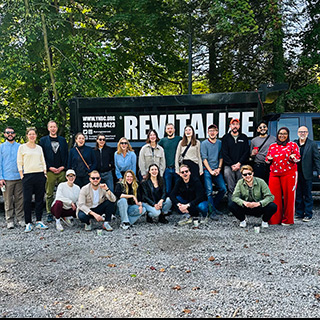
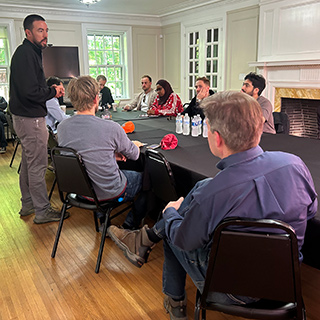
YNDC provided a tour for the Transatlantic Dialogue on Industrial Heartlands. The dialogue is a project by Das Progressive Zentrum, the Chicago Council on Global Affairs, Georgetown University BMW Center for German and European Studies, and the Progressive Policy Institute. The project is supported by the Transatlantic Program of the Federal Republic of Germany, funded by the European Recovery Program (ERP) of the Federal Ministry for Economic Affairs and Climate Action (BMWK).

The dialogue aims to create new opportunities in old industrial heartlands in both countries by forging a transatlantic dialogue, exchanging best practices and developing political strategies and policy solutions for a better, greener and more democratic future in the “places that don’t matter”. The main goal is to deliver increased living standards and opportunities, while also working towards rebuilding trust in democracy in the U.S. and Germany. 
 

Sidebar images:
Body:

ORCHID: To the Trumbull Neighborhood Partnership and Mahoning Valley Tree Corps for joining forces to plant hundreds of noninvasive trees in Warren over the next several years. Lydia Lynch, health and wellness coordinator for TNP, oversaw efforts last week to plant a set of trees on Vine Avenue SE and Atlantic Street NE. The project, which is being replicated in Youngstown with the Youngstown Neighborhood Development Corporation, will use grant funds to replace the fast disappearing natural green canopy throughout the city.

To read the full story from The Tribune Chronicle, click here.

Sidebar images:
Body:

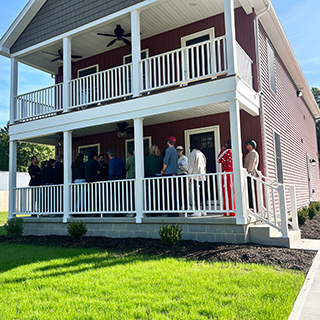
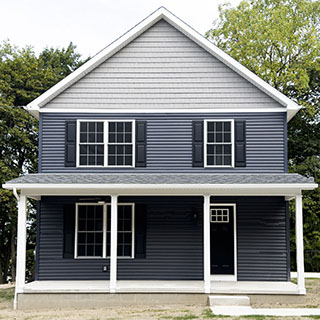
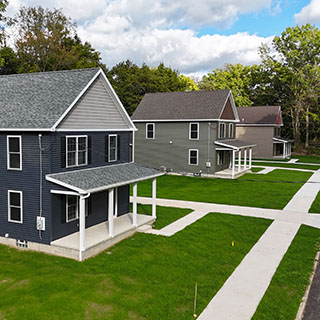
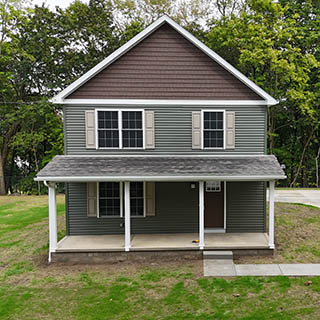
As an adult, Robert Benkert had not spent more than three years in one place. He was looking to settle down and decided to call Youngstown home.  Benkert’s not from Youngstown, but he wanted to buy a house and determined that Ohio had the least expensive in the country. On the day a new house went up for sale on a renovated street on the lower south side, Benkert made an offer. On Tuesday, he officially became Youngstown’s newest resident.  Benkert was thrilled to stand outside his new home on Bernard Street off of Glenwood Avenue. “I’m ecstatic even though I have it all contained right now,” he said. The 31-year-old Marine veteran who grew up in Florida is now on military disability. He most recently lived in Madison, Wisconsin, where he said a house of the same style but 50 years older is going for $350,000.  He was the first person to buy a house on Bernard and only paid $192,500.  “That’s a great price compared to any other place I’ve looked at,” Benkert said. “But Youngstown had the most to offer in terms of least expensive houses.”  It was Youngstown City Councilman Julius Oliver’s idea to build houses on Bernard Street. Of the three houses built, one has a sale pending and the other has yet to be sold.  They were built with American Rescue Plan money.

“The money that comes from the sale of these properties go into building more properties like it. Right now, we’re looking at Valley Street on the east side, as far as doing the same project like this,” Oliver said.  Ian Beniston, with the Youngstown Neighborhood Development Corporation, says before the homes were built, the land was an overgrown dumping ground.

To read the full story from WKBN, click here.

Sidebar images:
Body:

Jon Howell is seated at the Mocha House in downtown Youngstown. Next to him is Vicki Vicars, his friend and collaborator. It is the Monday morning after the Youngstown Renaissance Bus Tour, which they called “an open house for the South Side of Youngstown.” They are debriefing me, the new columnist at the Business Journal.

“When I come to Youngstown, I expect to win,” Howell said.

Howell graduated from South High School and moved around while working for the State Farm insurance company – “a winning organization,” he stressed, because it leads the nation in writing property and casualty insurance policies and insures one of every four cars. Now retired after 30-plus years, he and his wife considered where to spend their golden years. For Howell, the answer was the city he never left behind.

Howell saw a win in Eric Holm’s emerging plan for Youngstown Jubilee Urban Renewal to renovate the vacant South High as a workforce development center. Howell helped to organize the Youngstown Schools United event on Aug. 10 on South High’s front lawn. He asked Vicars for help in securing a prayer leader. She brought Deacon Jesse McClain, who prayed that afternoon and talked about how much is developing on the South Side.

Howell and Vicars quickly went to work on a plan to spotlight that activity.

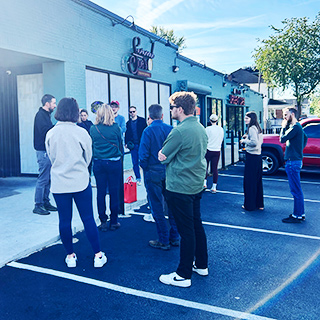
“Nobody said no” when they asked for support, Vicars said. Participants met at 8 a.m. Sept. 14 to tour South High. Then they broke into two groups, boarded charter buses, and visited six more sites. “Those 80 people felt special,” Howell said, because only 80 seats were available. CCA Graphics on Market Street printed the tour tickets at its cost.

Participants included bankers, a mortgage lender, real estate agents, an insurance agent, nonprofit leaders, retirees, elected officials and office workers. Joining in were a 19-year-old who was curious about community development and a widower who wondered what he’d missed while caring for his ailing spouse, Howell and Vicars said.

Bernard Street may have been the most surprising stop, Vicars said. Bernard is off Glenwood Avenue and parallel to High Street. Youngstown Neighborhood Development Corp. is building single-family, 1,560-square-foot houses there (on land it acquired through Mahoning County Land Bank).

To read the full story from The Business Journal, click here.