Some improvements are coming to a neighborhood on Youngstown South Side, making students’ walk to and from school a little better. Poles for new street lights are now going up around Taft Elementary School, on the city’s South Side. Most of the money came from the federal government’s Safe Routes to School Program.
The sidewalks and crosswalks around the perimeter of the school were previously replaced, which is helpful as a large number of students walk to school. In the past, problems with gun violence and drugs had made the neighborhood unsafe, and had forced kids to stay inside for recess.
Mahoning Valley TreeCorps is an initiative led by YNDC, Trumbull Neighborhood Partnership, Youngstown CityScape, the Healthy Community Partnership, along with many community partners. TreeCorps will restore and sustain the urban tree canopy in the cities of Youngstown, Ohio, and Warren, Ohio, in order to improve health, and make the urban forest accessible to all.
The program will: 1) develop a basic tree inventory and management plan for both cities; 2) provide forestry training to 75 local professionals and 75 young adults, create at least 5 living wage jobs, and fully involve neighborhood residents; and 3) plant and sustain 5,500 two-inch caliper trees in parks and greenspaces, and help municipal crews clear a backlog of urgent canopy maintenance issues necessary to sustain the urban forest. The program will help rebuild the canopy in areas of both cities where shade has been lost through vacant property demolition and dead tree removal efforts. Additionally, it will help alleviate the buildup of urgent tree maintenance needed in both cities, strengthen local capacity to manage and maintain the urban tree canopy, and create economic opportunities through urban forestry.
Additional community partners involved in this effort include the Cities of Youngstown and Warren, the Trumbull and Mahoning County Land Banks, Plant Ahead Ohio, Community Corrections Association, Choffin Career and Technical Center, Treez Please, Mill Creek MetroParks, Trumbull County MetroParks, Trumbull Soil and Water Conservation District, along with many neighborhood groups and community organizations.
Benefits of Trees
The benefits of planting shade trees in urban areas are enormous for residents and the environment. Shade trees reduce air pollution from cars and factories, provide needed summer shade, cool your home and reduce energy bills, encourage outdoor physical activity, improve mental health and wellness, improve property values, and have even shown to help reduce crime.
Where and What We Plant
Mahoning Valley TreeCorps plants shade trees that are 2” caliper in size (between 8 and 14 feet tall when planted), and will include a variety of species that are suitable to site conditions and will follow municipal Shade Tree Guidelines. TreeCorps plants trees with the primary purpose of providing shade to public spaces, and will NOT plant trees for agricultural or other purposes as part of this project.
Trees will be planted in publicly-accessible areas, such as: 1) city parks, boulevards, and medians; 2) tree lawns/devil strips where the adjacent neighbor approves, and 3) community greenspaces, such as lots maintained by community members and public lawns in front of businesses, schools, churches, and institutions.
Trees will NOT be planted in: 1) yards of private residences, 2) in front of abandoned lots or buildings that are not maintained (i.e. lots cut with municipal tractors), 3) any location that is not accessible to the public or not maintained by someone who will mow the grass/overgrowth under the tree on a regular basis.
TreeCorps will plant the trees for free and will water, prune, stake, and provide related tree care for the first three years. TreeCorps will NOT not mow grass, rake leaves, or provide any lawn maintenance to planting sites.
Request a Tree(s) in Your Tree Lawn or Community Greenspace
Groups or individuals interested in having a tree or trees planted on their tree lawn or community greenspace can contact 234.228.9349 or complete a Tree Request form online via https://tinyurl.com/treecorps
Expressing interest or filling out a request form does not guarantee a tree will be planted. Many factors play a role in where the trees can be planted such as: underground utilities, space available, proximity to signs, driveways, or intersections, and many other factors. The TreeCorps project team will evaluate each request.
This project made possible through a grant from the USDA Forest Service. This institution is an equal opportunity provider.
In accordance with Federal law and U.S. Department of Agriculture (USDA) civil rights regulations and policies, this organization is prohibited from discriminating on the basis of race, color, national origin, sex, age, disability, and reprisal or retaliation for prior civil rights activity. (Not all prohibited bases apply to all programs.)
Persons with disabilities who require alternative means of communication for program information (e.g., Braille, large print, audiotape, American Sign Language, etc.) should contact the responsible State or local Agency that administers the program or USDA’s TARGET Center at (202) 720-2600 (voice and TTY) or contact USDA through the Federal Relay Service at (800) 877-8339. Additionally, program information is also available in languages other than English.
To file a program discrimination complaint, complete the USDA Program Discrimination Complaint Form, AD-3027, found online at How to File a Program Discrimination Complaint and at any USDA office or write a letter addressed to USDA and provide in the letter all of the information requested in the form. Submit your completed form or letter to USDA by: (1) mail: U.S. Department of Agriculture, Office of the Assistant Secretary for Civil Rights, 1400 Independence Avenue, SW, Washington, D.C. 20250-9410; (2) fax: (202) 690-7442; or (3) email: program.intake@usda.gov.
The executive director of Trumbull Neighborhood Partnership, Matt Martin, navigates around a large industrial dumpster in the driveway of 3824 Greenmont Ave. in Warren. The single-story house, vacant for nearly a decade, sits in a well-groomed, agreeable neighborhood in the southeastern quadrant of the city. “This was a situation where it was probably going to end up getting demolished if we didn’t act,” Martin says of the structure.
Instead, the organization acquired the property last summer from the owner for $30,000 and will have invested another $100,000 in renovations when the project is complete. Once the house is ready, it will be placed on the market at an as-yet undetermined price. “Our main priority is to get an owner-occupant,” Martin says.
The TNP project represents the rescue of a single house in a single neighborhood. Yet this rehab represents a step toward addressing a growing problem across the Mahoning Valley – the lack of sustainable, quality housing that ultimately could affect economic and population growth. It’s a looming crisis that business and development leaders have not ignored. Indeed, the Youngstown/Warren Regional Chamber has made repopulation its No. 1 priority, according to its president and CEO, Guy Coviello. “We took up growing population as our first priority,” Coviello recently said at a press event. “But as we started to go down that path, we quickly realized we don’t have enough houses for people. Growing the housing stock is right behind growing the population as top priorities in this community.”
Remaking Neighborhoods In early January, contractors from American Pinnacle Construction, Youngstown, were busy laying new floor tiles at the Greenmont Avenue house. Should all go as planned, the property could come on the market by March. “This was vacant for years,” Martin says. “There were all kinds of wild animals and all kinds of stuff, raccoons.” In this case, TNP salvaged a house in a well-kept neighborhood that was in danger of being demolished. “It’s a high-quality renovation,” Martin says, noting the project accomplishes two critical goals. First, it helps to stabilize an already solid neighborhood. Second, it adds to a thin housing inventory.
Trumbull Neighborhood Partnership was formed as a nonprofit in 2010 in the aftermath of a financial and foreclosure crisis that hollowed out neighborhoods and communities across the Mahoning Valley. In 2013, the organization assumed management of the Trumbull County Land Bank, which empowered it to apply for state, federal and other financial resources to tackle the problem of blight and property vacancies. Since then, TNP has raised millions of dollars that it has devoted to either razing dilapidated structures or initiating restorations on houses that could be saved, Martin says. In 2015, the organization received a $17 million grant earmarked for demolition of structures across the county. That grant expired last year. “We’ve done about 1,300 demolitions in Trumbull County and about half that many renovations in the decade-plus that we’ve been here,” Martin says. In 2014, for example, a TNP survey identified 1,532 vacant houses in the city of Warren. According to a housing inventory update released in January, that number now stands at 432. However, the housing market has changed significantly – especially over the last three years, Martin says. “When we started doing this, many of the vacant homes had no value,” he says, which is no longer the case. “Properties have value again.”
While demolishing unsafe houses is critical to stabilizing neighborhoods, it also presents an opportunity to redevelop these vacant parcels into landscaped areas, or perhaps new construction. In 2024, Martin says TNP plans to build a “handful” – his description – of new houses while encouraging additional private investment in the neighborhoods.“In some cases, it’s more cost-effective to build,” he says.
New Residential Efforts in Youngstown The anemic housing inventory has squeezed not just potential homebuyers, but renters as well, observes Ian Beniston, executive director of Youngstown Neighborhood Development Corp., a nonprofit community development organization based in Youngstown.
To read the full story from The Business Journal, click here.
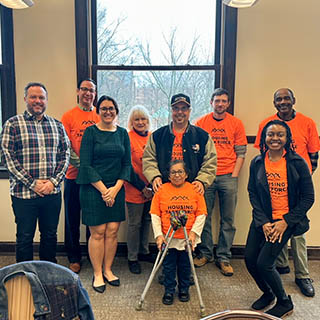
On Thursday, January 25, 2024, the Youngstown Housing Task Force (Task Force) along with allies from Habitat for Humanity of the Mahoning Valley and Trumbull Neighborhood Partnership visited the Warren, Ohio office of Congressman Dave Joyce. The task force members made the visit to ask for his support on the Neighborhood Homes Investment Act (NHIA).
The NHIA is designed to address the value gap in distressed neighborhoods by providing a new federal tax credit for the construction and renovation of single family housing. The NHIA will be a critical tool supporting revitalization in communities like Youngstown, the Mahoning Valley, and throughout Ohio, where housing values often do not support the cost to build or renovate a home.
NHIA will provide a much needed source of equity for non-profit housing developers and other local housing developers to build new homes and renovate existing vacant and distressed properties and will enable organizations like YNDC to accelerate our efforts to eliminate blight and vacancy, increase property values and equity growth for existing homeowners, reduce racial inequity in homeownership and neighborhood conditions, increase affordable homeownership opportunities, and contribute to overall neighborhood stabilization outcomes.
According to the NHIA Coalition, NHIA could finance the construction or rehabilitation of about 500,000 homes over 10 years if a Neighborhood Homes Tax Credit is enacted. Furthermore, $125 billion in total development activity is expected, alongside $56 billion in wages and salaries, $26 billion in federal tax revenue and $12 billion in state and local government revenue. More information can be found here.
The Task Force will be following up with Congressman Joyce's office in the next 30 days.
YNDC extends a huge thank you to the 108 individual donors that made donations during the Community Foundation of the Mahoning Valley's boost week. YNDC was able to raise a total of $16,913.56 from this brief campaign. A huge thanks to all who donated and who support YNDC throughout the year. THANK YOU!
From a cell phone or any other personal device there is a website that allows renters around the world to anonymously review and share information about their landlord. It’s simply called Rate The Landlord, which states on its website: “We are a community platform that elevates tenant voices to promote landlord accountability.” An array of reviews are present on the site from as far away as Brisbane, Australia; to Pittsburgh, Pa.; Kent, Ohio; and more.
New data reveals what has been identified as the most common problems that renters across the Buckeye State face. Landlords avoiding or mishandling repairs were at the top, according to a press release for the moving resource site moveBuddha. The site analyzed renter reviews submitted to Rate The Landlord.
In reaction, Ian Beniston, executive director of the Youngstown Neighborhood Development Corporation, said, “I am not surprised by the findings. We certainly hear from tenants through our housing task force efforts and repairs are a consistent issue.”
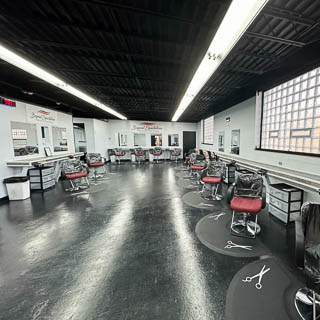
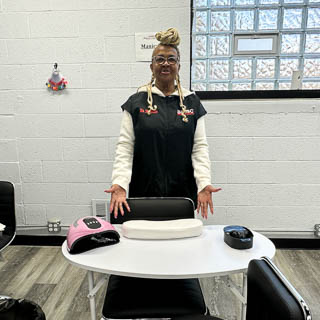
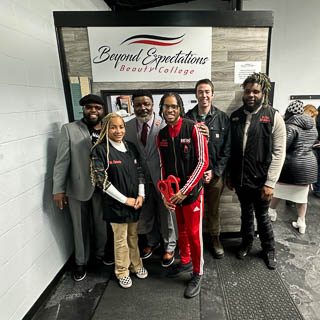
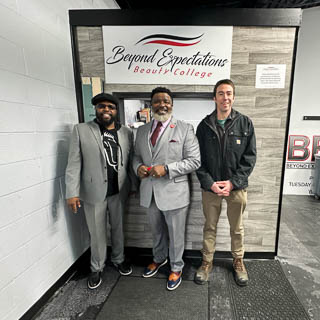
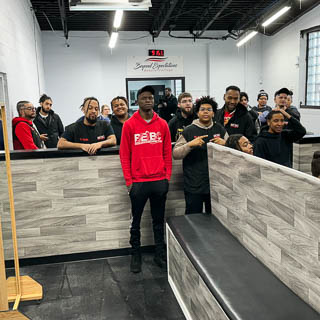
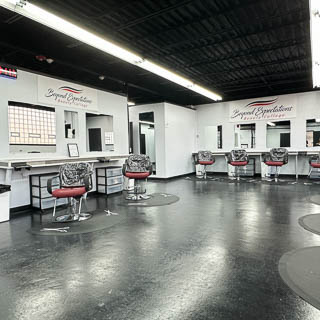
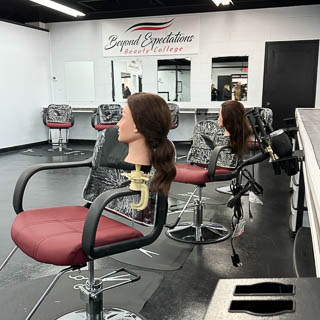
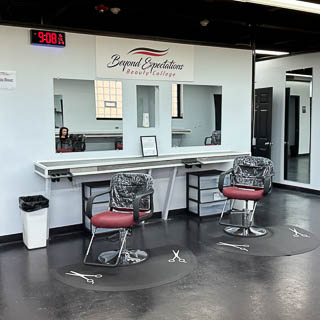
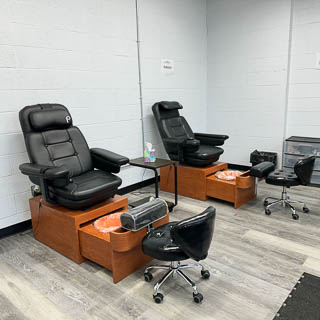
On Tuesday, February 13, Beyond Expectations Beauty College celebrated its grand opening at 2246 Glenwood Avenue, Unit C. Beyond Expectations Beauty College joins Beyond Expectations Barber College which opened at the site in July 2022.
Beyond Expectations Barber College is a well-known barber institution in the Akron and Youngstown area that trains young men and women not only to become licensed barbers, but to be more impactful members of society. The barber college, which opened in January 2013 in Akron, proudly integrates into the curriculum lessons on how to live "The American Dream" and the basics of owning a barbershop, while also creating a family legacy. Since its inception, the barber college has graduated over 200 students and boasts a 91% graduation rate, a 90% licensure rate, and a 100% job placement rate. In addition, the Barber College provides hundreds of discounted services each week to people throughout the community.
With over a decade of success at the barber level, BEBC decided to expand into the Cosmetology industry with Beyond Expectations Beauty College. As a beauty institution BEBC will use the same model that has proven to be successful but deliver it with the focal point being Cosmetology.
Beyond Expectations Beauty College is open from Tuesday through Saturday from 9am to 5pm and provides hair, nail, massage, and beauty services.
YNDC is pleased to welcome Beyond Expectations Beauty College to the Glenwood Avenue corridor!
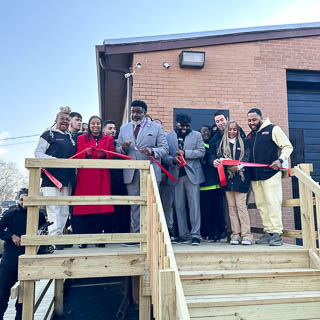
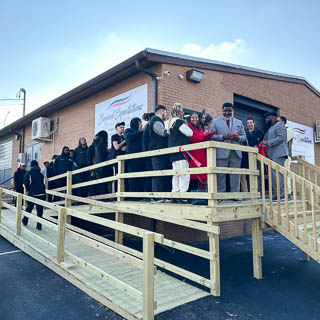
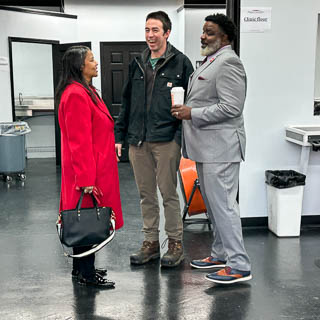
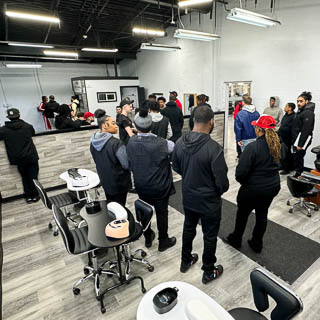
Beyond Expectations Barber College is growing into cosmetology. Business and community leaders cut the ribbon Tuesday morning at Beyond Expectations Beauty College, located in the rear of 2246 Glenwood Ave., the same building where the Beyond Expectations Barber College opened in 2022. “With the success we’ve had with the barber college, graduating over 200 people – we boast a 91% graduation, 90% licensure rate and a 100% placement rate – we wanted to just continue that into the beauty industry, the cosmetology industry,” said founder Eric Garrett Sr. He owns the colleges with his business partner, Daniel Williams. Garrett’s children, Eric Garrett II and Eryca Garrett, are the co-directors. “We wanted to make an impact,” Garrett said. “So far we’ve done a positive thing in the barbering industry. Traditionally, barber is synonymous with men, but now with the cosmetology piece, we felt like we wanted to expand.”
Tuesday’s grand opening drew community leaders, including Mayor Jamael Tito Brown who urged residents to take advantage of the new school. “This is an opportunity for our young men and women now for a career,” Brown said. “This is not just a job. This is a career for them.” Applications for the beauty college are available at the barber college.
Christin Cylar is the cosmetology and manicure programs instructor. The program requires 1,500 hours for the cosmetology program, 200 hours for the manicure program and an additional 100 hours for the advanced manicure program, she said. Beyond Expectations Barber College, which was founded in 2013 in Akron, teaches its students about more than hair. Courses cover the basics of owning a business, financial literacy and the importance of mental and physical health. “Part of the American dream is just that,” Garrett said. “As a disabled veteran myself, I love this amazing country. Giving other people the idea or the thought process or the skill to be able to own their own business is part of the American dream. That’s part of what we incorporate in our curriculum.”
Beyond Expectations partners with Youngstown Neighborhood Development Corporation, Choffin Career & Technical Center, Mahoning and Columbiana Training Association and the Bureau of Vocational Rehabilitation.
To read the full story from The Business Journal, click here.
Business and community leaders cut the ribbon Tuesday morning at Beyond Expectations Beauty College, located in the rear of 2246 Glenwood Ave., the same building where Beyond Expectations Barber College opened in 2022.
The Barber College, which was founded in 2013 in Akron, teaches its students about more than hair. Courses cover the basics of owning a business, financial literacy and the importance of mental and physical health.
“Although we’re opening during our grand opening today, that’s primarily for the students,” says Eric Garrett Sr., founder of both Beyond Expectations Barber College and Beauty College. “To open up to the actual public, that won’t happen until later during the summer.”
To watch the full video from The Business Journal, click here.

 Sitemap
 ,
,  ,
, 
 ,
,  ,
,  ,
,  ,
, 
 ,
,  ,
,  ,
,  ,
,  ,
,  ,
,  ,
,  ,
,  ,
,  ,
,  ,
,  ,
,