Legacy cities across the country are dealing with the ramifications of decades of industrial decline and suburbanization without population growth.
They have experienced, and many continue to experience, population and job losses, which have left them with crumbling infrastructure, widespread vacancy and abandonment, and environmental contamination (PDF). Confronting these issues requires creative thinking from local government and civic, business, and community leaders. Although policymakers and scholars generally pay more attention to larger legacy cities (think Detroit, Baltimore, and Philadelphia), small to midsize cities are also laboratories for innovation. City governments in Erie, Pennsylvania; Syracuse, New York; Flint, Michigan; and many other cities are developing a wide range of green and sustainable initiatives, adopting and implementing plans, programs, projects, and policies that city officials hope will remediate contaminated land, add more trees and green space, improve water quality, increase energy efficiency, and combat climate change.
Green and sustainable initiatives can be especially attractive to small and midsize legacy cities for several reasons:
- Their history of industrialization has left them with polluted sites and waterways that need environmental remediation, repair, and rehabilitation.
- Many of these cities used to have strong local economies but have shed jobs and people over the past several decades. As a result, they need to attract new residents and investment to grow and remain competitive. Green and sustainable initiatives can help arrest further decline and induce people to return.
- The impact of legacy city’s decline disproportionately affected many of their low-income residents, including people of color and those facing lead issues, substandard housing, and less access to green space, clean water, and safe homes.
To learn how small to midsize legacy cities have incubated green and sustainable projects, our research team inventoried (or “greenventoried”) initiatives in cities that have lost a substantial share of their population (about 15 to 20 percent from their midcentury peak) and have fewer than 300,000 residents. Our greenventory included cities as small as Dubuque, Iowa, (58,000 people) to cities as large as Buffalo, New York, (250,000 people).
Based on that research, four key themes emerged:
- Small to midsize cities pursue a host of environmental programs.
Although these cities face a range of challenges, they are not sitting idly by. Our initial scan of only publicly available materials turned up more than 100 programs, plans, policies, and projects in 43 cities across the Northeast, the Midwest, and the South, all with an extreme breadth of activities. We found many initiatives to expand green infrastructure (PDF) and combat climate change, as well as activities focused on water quality, energy efficiency, solid waste, food policy, transportation, and the green economy.
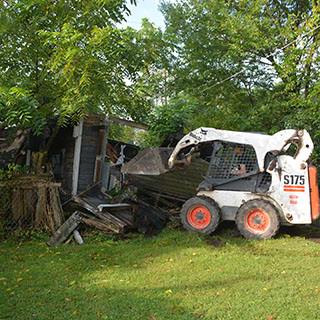
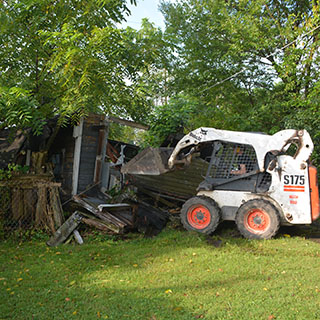
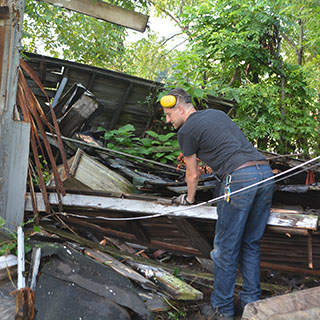
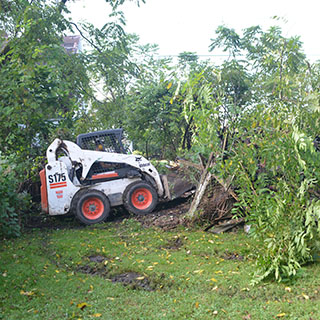
The scope of projects varies widely as well. At one end of the spectrum are small, self-contained programs, such as the City of Rochester’s addition of a green roof and permeable parking lot to their city hall. Cities also have programs that are small in scale but part of ongoing initiatives, such as funds to support community gardens or help with energy efficient upgrades. At the other end are massive undertakings designed to address major infrastructure changes. In Buffalo, for example, the sewer authority has launched several programs to reduce stormwater runoff and improve water quality. The city is providing support to community groups to increase permeable surfaces and has launched a multiyear demolition program to remove hazardous properties and give them a “green treatment.”
- Small to midsize legacy cities can leverage significant natural assets for sustainable redevelopment.
Many legacy cities are located along rivers and major bodies of water (such as the Great Lakes) that have facilitated the movement of goods and people or supported factories and industry. Over time, these bodies of water became severely polluted (think the Cuyahoga River fires). Instead of treating them as a liability, many cities have found ways to leverage their natural beauty to turn them into productive assets and have designed strategies around cleaning up polluted rivers. In Wilmington, Delaware, for example, the city has converted the formerly polluted land along the Christina River into revitalized urban space and parkland, going so far as to replant native species.
- Green and sustainable thinking are shaping cities’ revitalization and redevelopment strategies.
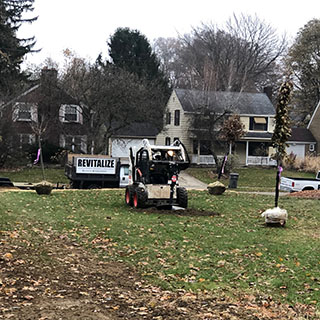
Small and midsize legacy cities are similar to their larger peers in that they have significant redevelopment needs stemming from their large numbers of vacant and abandoned properties. Many cities have found success using green thinking to address issues of vacancy and abandonment. The clearest example is cities converting vacant land into parks and community space. Greening vacant lots can help stabilize neighborhoods and encourage private investment. In Flint, for example, the city updated its zoning code (PDF) to allow for community gardens, urban agriculture, and increased green space in certain low- and medium-density neighborhoods. Cities are also finding that redevelopment offers the opportunity to add green or sustainable elements to a project. The revitalization of the Grand Rapids Downtown Market, for example, includes substantial green infrastructure projects such as LEED buildings, rooftop greenhouses, rain gardens, and geothermal wells.
- Regional and local nonprofit organizations and institutions are partnering with smaller cities to provide additional capacity and assistance.
Small cities primarily differ from their larger peers in their fiscal health and staff capacity to carry out programs. Even in our limited dataset, we found that the larger the city, the more activities and the greater variety in activities. Larger cities were more likely to have sustainability offices or similar agencies that could provide leadership, set goals, and help coordinate initiatives among different departments and collaborate with regional and local partners. Although there were some outliers Binghamton, New York, with less than 50,000 people, had a lot of activity some of the very small cities have only one or two people working on sustainability issues.
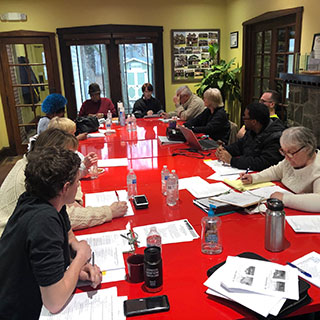
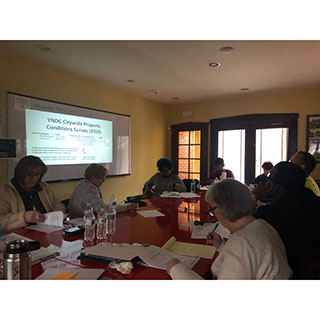
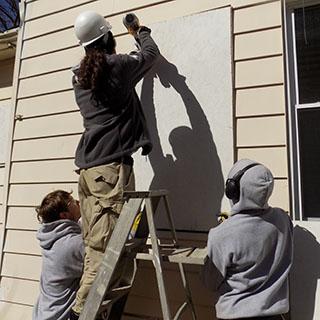
However, the nonprofit sector can help cities partially overcome municipal capacity challenges. In Youngstown, Ohio, for example, the Youngstown Neighborhood Development Corporation launched an initiative to repurpose vacant lots in the city’s Idora neighborhood. Another example is Ball State University’s ecoREHAB program that works in partnership with the City of Muncie, Indiana, and Habitat for Humanity to rehabilitate homes.
To see the full story from Housing Matters, click here.

 Sitemap
 ,
,  ,
,  ,
, 
 ,
,  ,
, 
 ,
,  ,
,