Neighborhoods


Strategic Neighborhood Transformation

Sidebar images:
,
Body:

Monday, July 16, 2018

YNDC's free small business and housing counseling programs are available to Mahoning Valley entrepreneurs and prospective homebuyers.

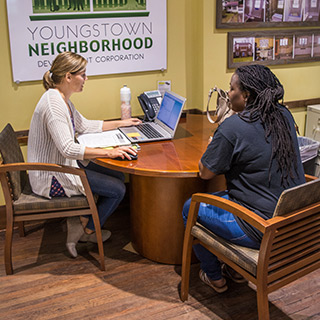
The Small Business Development program, funded by the Burton D. Morgan Foundation and Ohio Community Development Corporation Association, is designed to help entrepreneurs in the Mahoning Valley reach their business goals with financial counseling.  Both established and aspiring business owners can access free financial counseling to assist with resolving credit issues, reaching financial goals, and preparing to seek business financing. YNDC is also a HUD-Approved Housing Counseling Agency dedicated to helping clients achieve sustainable homeownership by assisting clients with identifying and resolving barriers to homeownership in one-on-one counseling sessions. To enroll in either counseling program, please contact Tammi at 330.480.0423 today!

Sidebar images:
Body:

Wednesday, July 18, 2018

Housing Counseling client Michael Pierce was renting a home in Youngstown for five years before he was given the option to buy his home.

After looking around online, he and his fiancé realized that, with a little work, they could afford to buy a newer home. Michael heard about YNDC’s Housing Counseling from social media and made an appointment with Tammi to review his financial situation.  After a few short months, Michael was able to close on his new home at 2002 Weston in the Brownlee Woods Neighborhood. Michael and his fiancé were drawn to the quiet neighborhood because it was very close to both of their jobs and many homes on the street were newer. Their corner lot home needed some work but they were able to finish and move in quickly after closing. Michael said buying a home gives him a sense of security compared to renting. His advice for new homebuyers is to carefully review all the options available, including financing, grants, and programs like YNDC’s Housing Counseling. Thanks for sitting down with us, Michael and good luck in your new home!

Sidebar images:
Body:

Buying a home is a long and difficult process in and of itself. A quicker route is through a land contract but is it safe?

A land contract allows people who can't get a loan for various reasons to still be able to buy a house. Instead of paying back the bank or a lender, the buyer pays the homeowner or a company each month until the house is paid off. Sounds good, right? A lot of people in the Valley thought so. "We were completely snowed or, as they say, bamboozled," Craig Gilchrist said. He's a victim of a land contract gone wrong. In 2007, Gilchrist and his wife saw an ad in the paper to lease to own a house. They jumped on the opportunity. "I had no suspicion that anything was not the way it was supposed to be," he said. That is, until move-in day. Gilchrist and his family were evicted from the house even though they paid $1,500 a month for nearly three years before moving in. "For the entire time that we had been paying our mortgage, what we thought was our mortgage, he had never been paying anything," he said. The house wasn't officially in their name yet so they couldn't do anything about it. His story isn't uncommon in the Youngstown area. "In my view, it's criminal and something needs to be done about it," said Ian Beniston, president of the Youngstown Neighborhood Development Corporation. Mahoning County has 1,276 land contracts and Trumbull County has 2,706. To read the full story from WKBN, click here. 

Sidebar images:
Body:

There were more than 47,000 land contracts in Ohio between January 2008 and January 2018, according to a report released Friday and written by Policy Matters Ohio researcher Victoria Jackson.

The report documents the growing prevalence of land contracts in Ohio and their concentration in the Mahoning Valley, one of the areas hardest hit by predatory home sellers. “Unscrupulous speculators use land contracts to foist the costs of home-ownership onto buyers without actually selling them anything. Buyers, meanwhile, retain none of the protections of a conventional mortgage,” Jackson said. “Land contracts combine the worst parts of renting a home with the worst parts of buying one.” Land-installment contracts were once a tool for speculators to exploit minority and poor families barred from access to traditional mortgages, and have made a resurgence in Ohio since the foreclosure crisis. Under these arrangements, buyers accrue zero equity in their home until the entire cost, plus interest, taxes, liens and fees, are paid in full. To read the full story from The Vindicator, click here. 

Sidebar images:
, , , , ,
Body:

Tuesday, July 24, 2018

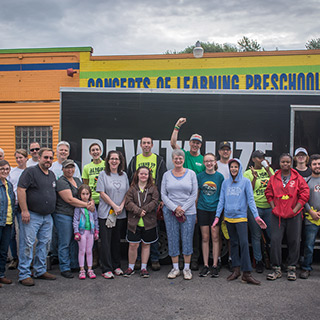
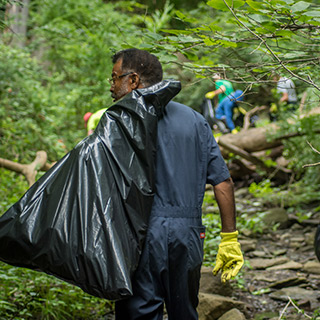
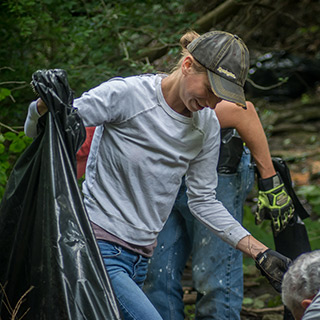
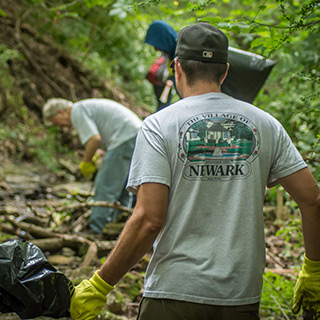
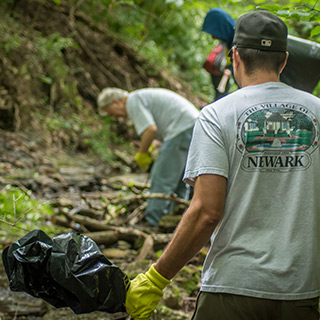
On Saturday, July 21, twenty-four volunteers helped clean up the ravine between Kiwatha Road and Canfield Road at the Idora Neghborhood Workday.

Volunteers from AmeriCorps College Guides/MUCAP, Metro Assembly of God, Middleburgh Reformed Church of Middleburgh, New York, and Tabernacle Evangelical Presbyterian Church/Hope for Renewal helped remove 7 cubic yards of trash and debris from the riverbed and surrounding area in the ravine. Thank you to all the volunteers for their hard work!

Sidebar images:
, , ,
Body:

Thursday, July 26, 2018

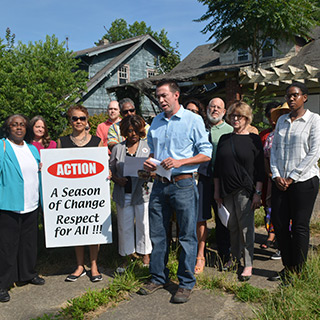
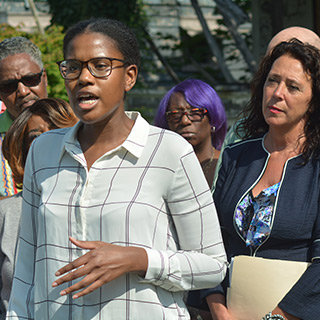
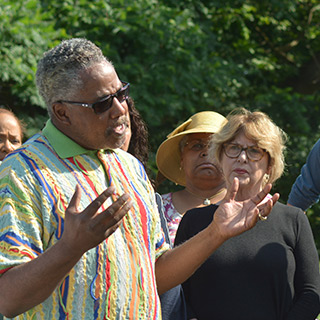
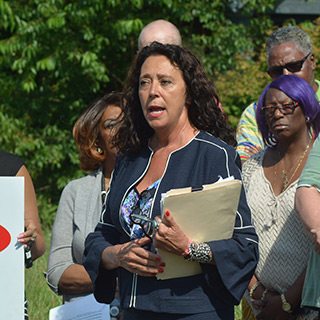
On Friday, July 20, YNDC Executive Director Ian Beniston
joined A.C.T.I.O.N. Executive Director Rose Carter, PolicyMatters researcher Victoria
Jackson, State Representative Michele Lepore-Hagan, resident Craig Gilchrist
and other community leaders and policy makers in a press conference outside
Vision Property Management-owned 226 East Lucius Avenue to urge the Ohio
General Assembly to consider legislation aimed at curbing abusive land contract
agreements.

Participants heard Gilchrist speak about his own experience with a
predatory land contract, having made payments for three years without realizing
the owner of the home was in foreclosure the whole time. He was evicted from
his home and, without legal protections as a homeowner or renter, was not able
to recuperate his losses. Mahoning County has 1,276 active land contract agreements
and Trumbull County has 2,706. Those who believe they are in a predatory land
contract are encouraged to call Community Legal Aid at 330.744.3196.

Sidebar images:
,
Body:

Thursday, July 26, 2018

On Thursday, July 26, the John and Loretta Hynes Foundation awarded YNDC with a $10,000 grant for Corridor Improvement Corps.

The Corridor Improvement Corps is a comprehensive revitalization strategy aimed at improving public health, safety, and quality of life for residents by leveraging AmeriCorps members and community volunteers to complete physical improvements to Youngstown’s neighborhood corridors. The improvements will include 1) cleaning up and painting blighted walls and facades of vacant buildings, 2) cleaning up and clearing overgrowth from vacant lots littered with debris, 3) planting hearty urban trees, 4) installing split rail fencing along vacant lots, 5) replacing broken and unsafe sidewalks, 6) installing covered benches at public spaces and bus stops, and 7) improving corridor lighting and signage around public spaces and corridor businesses. When applied systematically, these improvements will restore a basic sense of order to Youngstown’s corridors and will result in sustainable improvements to the safety and quality of life for Youngstown’s residents. Many thanks to the John and Loretta Hynes Foundation for the support! REVITALIZE.

Sidebar images:
Body:

Thursday, July 26, 2018

The PNC Foundation has awarded YNDC with a $7,500 grant to support affordable housing development in the City of Youngstown.

We would like to thank the PNC Foundation for their generosity!

Sidebar images:
Body:

The image of America’s housing crisis is of pricey, increasingly unaffordable housing in superstar cities. And there is too little housing—a scarcity—in those places. But there is another, even more disturbing side to America’s housing crisis: vacancy, and in some cases hyper-vacancy, in the nation’s hard-pressed Rust Belt cities.

This other side of the housing crisis is the subject of a new report published by the Lincoln Institute of Land Policy. The report, written by Alan Mallach of the Center for Community Progress, examines the extent of housing vacancy across America’s cities, identifies its staggering economic and social costs, and outlines policies to address it. Mallach uses data from the U.S. Census and U.S. Postal Service to identify vacant properties.

While housing vacancy has long been a problem in America, especially in economically distressed places, vacancies surged in the wake of the economic crisis of 2008. The number of unoccupied homes jumped by 26 percent—from 9.5 to 12 million between 2005 and 2010. Many people (and many urbanists) see vacancy and abandoned housing as problems of distressed cities, but small towns and rural communities have vacancy rates that are roughly double that of metropolitan areas, according to the study. To read the full article from Citylab, click here. 

Sidebar images:
, , ,
Body:

Monday, July 30, 2018

YNDC is getting the work done in 2018! Here are some highlights of our work to date this year:

181 new clients were enrolled in HUD-approved housing counseling

460 volunteers cleared 1,546 yards of debris and removed 576 tires at 11 workdays

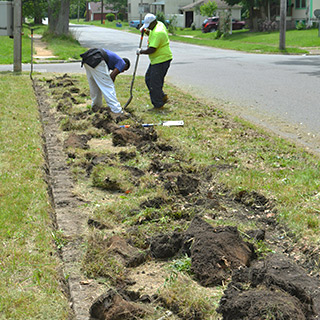
13,766 linear feet of sidewalk scraped

451 students attended 34 Safe Routes to School events

14 vacant homes were rehabilitated